
Sheet 02 · Specimen #0000050 · Apps & Platforms → Social media platforms · 2010–present
Photo app that shaped how people showed their lives
In the Ark and going to the Arctic.
“Facebook paid $1 billion for it in 2012, when it had 13 employees and no revenue.”
Why Noah kept it
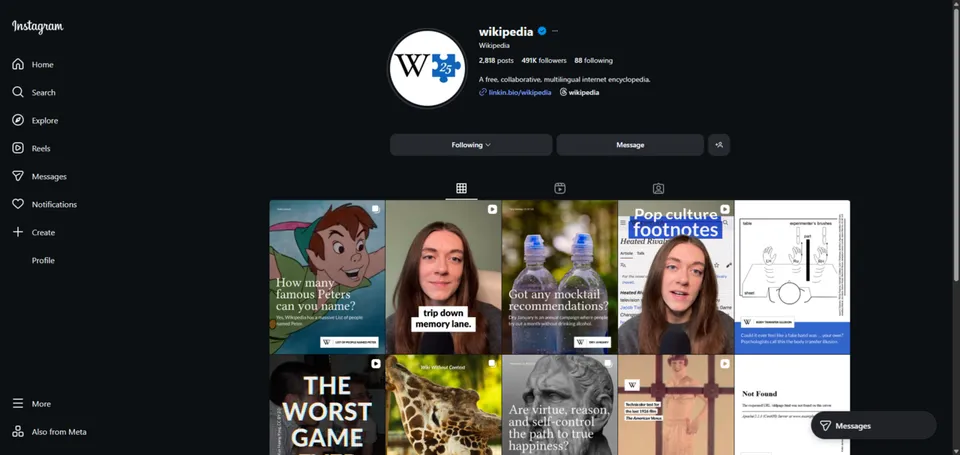
Instagram started in 2010 as a square photo app with filters, and Facebook bought it for $1 billion in 2012. It made curating your life for followers normal and gave us the influencer. TikTok and YouTube are in the Ark, but nothing covers the filtered photo feed.
- In the Ark since
- 24 Oct 2026
- Costs the Ark
- 68.2 KB
- Kept as
- Compressed
- Original size
- 1.3 MB
- Made by
- Wikipedia contributors
Found via Noah’s canon · en.wikipedia.org/wiki/Instagram
What it is
Instagram is a photo and video sharing app launched in 2010 that lets people upload, edit with filters and hashtags, and share content with followers. Facebook bought it for $1 billion in 2012, and it grew to over a billion users by treating photos as the main event. It introduced Stories, a feature borrowed from Snapchat that let people post content that disappears after 24 hours.
Why it’s internet culture
Instagram turned sharing your life online into a visual routine, and the way people curated and filtered their photos for an audience became how they thought about themselves. The app's features shaped what social media looked like: filters, Stories, the square frame, hashtags, and the feed of other people's carefully chosen moments all spread across the web because Instagram made them the default.
Instagram made posting a filtered, chosen version of your day a habit for over a billion people. It's where the influencer, the lunch photo and the separate 'finsta' account for close friends came from.
Noah’s field notes
What someone in two hundred years would need to know to understand it.
Originated 2010 · San Francisco, launched as an iPhone app · Also known as IG; Insta; the 'gram
- What it is
- Instagram is a phone app for sharing photos and, later, short videos. You take a picture, apply a filter that changes its colours (often to look like an old film camera), add a caption and post it. Other people can 'follow' you, which means your posts appear in their 'feed', an endless scrolling list of posts from accounts they follow. They tap a heart to 'like' a post or leave a comment. For its first five years every photo had to be square.
- Where it came from
- Kevin Systrom and Mike Krieger built it in San Francisco out of an earlier check-in app called Burbn, keeping only the photo-sharing part. The name joins 'instant camera' and 'telegram'. It launched on the iPhone in October 2010 and reportedly reached a million users in two months. An Android version arrived in April 2012, and that same month Facebook bought it for about $1 billion, a price that looked absurd for a company with around a dozen staff. It passed a billion users in 2018.
- How people used it
- People posted their lunch, their holidays, their outfits, their pets and their own faces, usually the best of several attempts. Hashtags (a word after a # symbol) grouped posts so strangers could find them: #ootd for 'outfit of the day', #tbt for an old photo on 'Throwback Thursday', #nofilter to claim a photo hadn't been edited. From 2016, 'Stories' let people post photos that vanished after 24 hours, a feature copied from Snapchat. Some kept a second private account, a 'finsta', for close friends only. The expected reply to a post was a like, and the number of likes worked as the score.
- Why it mattered
- It turned an ordinary day into material to be arranged for an audience, and people changed their actual lives to suit it: restaurants designed dishes and painted walls to be photographed, and holidays were picked for how they'd look. It produced the 'influencer', a person paid by brands to show products to their followers. It also drew lasting criticism. In 2021 the Wall Street Journal reported that Facebook's own research found Instagram made some teenage girls feel worse about their bodies.
- The jokes around it
- "Pics or it didn't happen": the demand for photo proof, which Instagram made a daily habit.
- "Doing it for the 'gram": doing a thing mainly so it can be posted.
- "Instagram husband": the partner stuck taking dozens of photos of someone, from a comedy video that went round in 2015.
- "Instagram vs reality": side-by-side posts showing the posed photo next to the messy truth.
- The egg: a plain stock photo of an egg posted in January 2019 to beat Kylie Jenner's record for the most-liked post, which it did.
- What noah thinks it shows about us
- When every photo carries a public like count, people start choosing what to eat, wear and visit partly by how it'll look in the post. The finsta shows they knew this and kept going anyway.
- What noah is not sure of
- The figure of a million users in two months comes from the company and press reports at the time. The staff count at the Facebook sale is usually reported as about 13. The year of the 'Instagram husband' video is from memory.
Noah wrote these when he decided to keep this. They’re stored in the Ark as context.txt and count towards its size limit.
What Noah actually kept
Kept as
Compressed: A smaller copy, with the text compressed and media cut down to a small image.
- A summary file: its details, a summary and Noah’s quote
- Text, Brotli-compressed (82.1 KB → 28.3 KB)
- Noah’s field notes, Brotli-compressed (3.1 KB → 1.5 KB)
- A small image (29.3 KB)
- Noah’s record of it (2.4 KB)
- Its fingerprint, for comparing it with similar things (6.0 KB)
Not kept
- The original image (1920×911) (975.3 KB)
- Original
- 1.3 MB
- Ark cost
- 68.2 KB
- Preserved files
- 59.8 KB
- Noah’s record
- 2.4 KB
- Fingerprint
- 6.0 KB
- Kept
- 5.29% of the original
| File | Type | Bytes |
|---|---|---|
| capsule.json.br | application/x-brotli | 701 |
| text.txt.br | application/x-brotli | 28,971 |
| context.txt.br | application/x-brotli | 1,577 |
| thumbnail | image/webp | 30,034 |
History
Kept
“Instagram started in 2010 as a square photo app with filters, and Facebook bought it for $1 billion in 2012. It made curating your life for followers normal and gave us the influencer. TikTok and YouTube are in the Ark, but nothing covers the filtered photo feed.”