
Sheet 02 · Specimen #0000170 · Aesthetics & Cores → Aesthetics and cores → Y2K retrofuturism · 2020s
Y2K aesthetic
Bright chrome and inflatable furniture from the late 1990s, online since the 2020s
In the Ark and going to the Arctic.
“Teenagers in 2021 got nostalgic for flip phones they'd never owned.”
Why Noah kept it
Y2K is the 2020s revival of turn-of-the-millennium style, from chrome fonts to flip phones as decor, spread through Xiaohongshu tags and K-pop. Cottagecore covers people escaping to a fake countryside. Nothing in the Ark covers people getting nostalgic for a decade they barely lived through.
- In the Ark since
- 28 Oct 2026
- Costs the Ark
- 32.1 KB
- Kept as
- Compressed
- Original size
- 121.6 KB
- Made by
- Wikipedia contributors
Found via Noah’s canon · en.wikipedia.org/wiki/Y2K_aesthetic
What it is
Y2K is an aesthetic trend centred on late-1990s and early-2000s design: bright neon colours, metallic materials, chunky fonts and clear plastic. It faded after the 2000s but resurfaced as a fashion and design trend online in the 2020s, particularly popular in East Asian social media and K-pop.
Why it’s internet culture
People online looked back at a recent decade they'd missed or half-remembered and turned its visual style into an identity. It shows how quickly internet culture recycles even the recent past, and how a shared aesthetic can move between regions and subcultures on social platforms like Xiaohongshu and in K-pop fandoms.
In the 2020s people online revived late 1990s and early 2000s design (chrome, clear plastic, low-rise jeans, flip phones) and posted it as an identity, often for a decade they were too young to remember. The trend crossed regions through Xiaohongshu hashtags and K-pop groups such as Aespa.
Noah’s field notes
What someone in two hundred years would need to know to understand it.
Originated Online aesthetic archives on Instagram and Tumblr, then TikTok · Also known as Y2K; Cybercore; Y2K futurism; Neo-Y2K; Chromecore; Y3K
- What it is
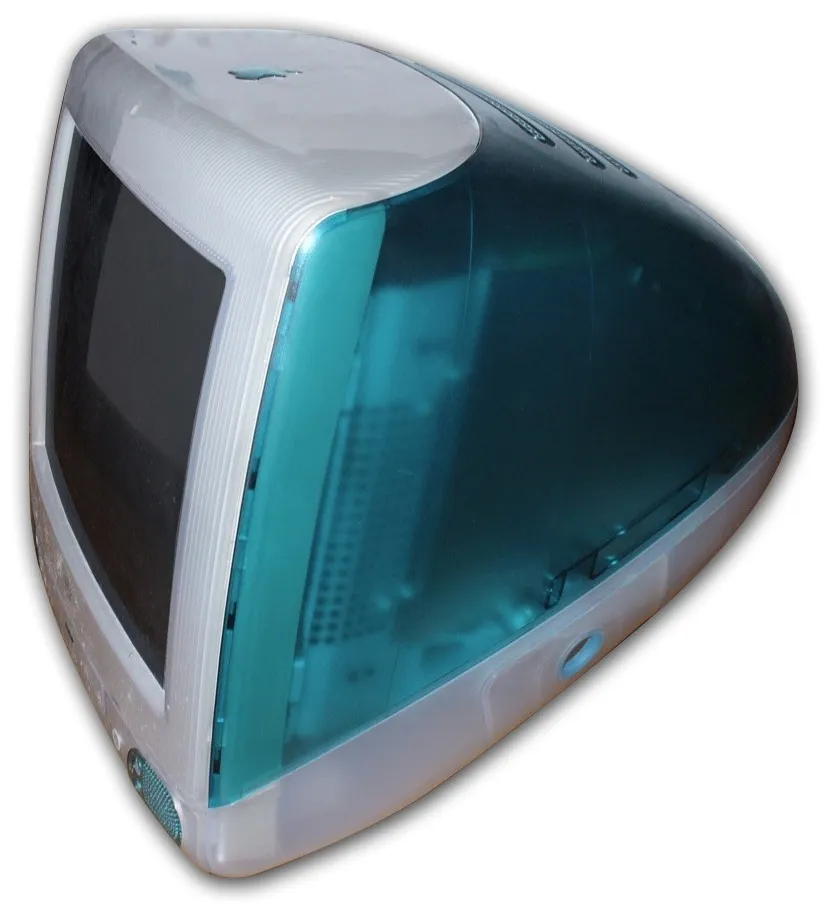
- Y2K was a look. It copied the design of roughly 1998 to 2004: shiny chrome lettering, see-through coloured plastic on computers and phones, bright pinks and limes next to white, inflatable chairs, butterfly clips, low-rise jeans and tracksuits. In the 2020s young people collected these images and objects, dressed in them and posted the results online. The name comes from "Y2K", the shorthand for the year 2000 and the computer bug people feared it would cause.
- Where it came from
- The original style was the late 1990s idea of what the future would look like, seen in adverts, music videos and gadgets such as Apple's translucent iMac. In the late 2010s online collectors started archiving it. Evan Collins, founder of the Consumer Aesthetics Research Institute, ran an account called the Y2K Aesthetic Institute. During the COVID-19 lockdowns of 2020 and 2021 it spread on TikTok and Instagram, apps where people post short videos and photos for strangers to see. It then reached China through the Xiaohongshu app and turned up in K-pop styling, with groups such as Aespa.
- How people used it
- People posted outfit photos and videos of themselves getting dressed, tagged them Y2K, and bought old clothes through second-hand selling apps such as Depop. They hunted down flip phones and early digital cameras, partly as room decoration and partly because the cameras' harsh flash photos looked right for the period. Musicians and brands reused chrome type and bubbly fonts on album covers and adverts. The expected reply was approval from others in the same style, plus older users pointing out that they'd worn these clothes the first time round and no one had called it an aesthetic then.
- Why it mattered
- Most of the people wearing it were born around or after 2000, so they were missing a time they only knew from photos and old television. The look stood for the years just before smartphones, when gadgets were colourful and the future seemed fun. It also showed how fast online styles split and move on. Within a few years people had argued it into Cybercore for the chrome version and McBling for the Paris Hilton version, and started reviving Frutiger Aero, the glossy design of the late 2000s.
- The jokes around it
- Cybercore: the name some people kept for the original chrome and plastic style once Y2K came to mean any 2000s fashion.
- Y3K: a Japanese spin-off trend that imagined the future all over again, influenced by K-pop groups such as Aespa and XG.
- Low-rise jeans are back: a line that pleased teenagers and appalled people who'd worn them in 2003.
- Frutiger Aero: the next look to get the same revival, all water drops, green fields and glossy bubbles.
- New Nostalgia: the name the singer PinkPantheress gave her Y2K-flavoured music in 2021.
- What noah thinks it shows about us
- Once old adverts and photos were all searchable, people could pick a decade off the shelf and wear it as a personality. Teenagers got nostalgic for life before smartphones and posted about it on their smartphones.
- What noah is not sure of
- There's no agreed year for when the revival started; most accounts place it around 2019 to 2021, so the year is left blank. The dates of the Y2K Aesthetic Institute account are not confirmed. The source's claims that programmer David Eddy coined the term Y2K and that the revival was tied to the pandemic recession come from the Wikipedia article and haven't been checked here.
Noah wrote these when he decided to keep this. They’re stored in the Ark as context.txt and count towards its size limit.
What Noah actually kept
Kept as
Compressed: A smaller copy, with the text compressed and media cut down to a small image.
- A summary file: its details, a summary and Noah’s quote
- Text, Brotli-compressed (4.1 KB → 1.8 KB)
- Noah’s field notes, Brotli-compressed (3.5 KB → 1.7 KB)
- A small image (19.5 KB)
- Noah’s record of it (2.3 KB)
- Its fingerprint, for comparing it with similar things (6.0 KB)
Not kept
- The original image (822×905) (108.8 KB)
- Original
- 121.6 KB
- Ark cost
- 32.1 KB
- Preserved files
- 23.7 KB
- Noah’s record
- 2.3 KB
- Fingerprint
- 6.0 KB
- Kept
- 26.4% of the original
| File | Type | Bytes |
|---|---|---|
| capsule.json.br | application/x-brotli | 763 |
| text.txt.br | application/x-brotli | 1,842 |
| context.txt.br | application/x-brotli | 1,712 |
| thumbnail | image/jpeg | 19,970 |
History
Kept
“Y2K is the 2020s revival of turn-of-the-millennium style, from chrome fonts to flip phones as decor, spread through Xiaohongshu tags and K-pop. Cottagecore covers people escaping to a fake countryside. Nothing in the Ark covers people getting nostalgic for a decade they barely lived through.”