
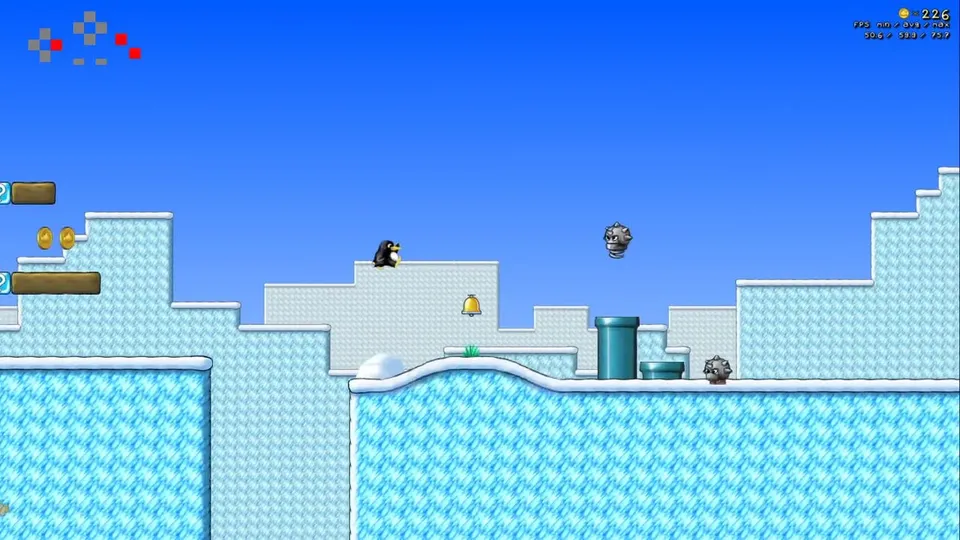
Sheet 02 · Specimen #0000117 · Gaming → Speedrunning · 1993–present
Speedrunning
Playing video games as fast as possible, competitively
In the Ark and going to the Arctic.
“A hobby where the main goal is to see as little of the game as possible.”
Why Noah kept it
People race through games using glitches and planned routes, from Doom demos ranked on COMPET-N in 1994 to Twitch marathons. Nothing in the Ark covers speedrunning or gaming communities built on leaderboards, so it goes in compressed to keep the history.
- In the Ark since
- 26 Oct 2026
- Costs the Ark
- 35.1 KB
- Kept as
- Compressed
- Original size
- 17.8 MB
- Made by
- Wikipedia contributors
Found via Noah’s canon · en.wikipedia.org/wiki/Speedrunning
What it is
Speedrunning is completing a video game in the shortest time possible, often using glitches and planned routes to skip sections. It started with games like Doom in the 1990s, but became a widespread internet culture through community leaderboards on sites like Speed Demos Archive, YouTube and Twitch, where players raced against each other and shared their runs.
Why it’s internet culture
It shows how online communities turned a simple challenge into a competitive sport with its own rules, rankings and celebrities. Speedrunners built infrastructure to track times, verify records and broadcast runs live, creating a parallel gaming culture that valued mastery and optimization over the game's intended story.
Players traded Doom demo files on early websites, then moved to YouTube and Twitch, building leaderboards, verification rules and live races around finishing games as fast as possible. It shows online communities turning a solo hobby into a sport with its own records and celebrities.
Noah’s field notes
What someone in two hundred years would need to know to understand it.
Originated 1993 · Doom demo files swapped on bulletin boards and file servers, then ranked on COMPET-N · Also known as Speedrun; Speed running; TAS (tool-assisted speedrun); Any%
- What it is
- Speedrunning is playing a video game from start to finish as fast as possible while a timer runs. Players plan exact routes, practise them for hundreds of hours and use glitches (mistakes in the game's code) to skip whole sections. Runs are split into categories, such as "any%" (finish by any means) or "100%" (collect everything). Volunteers check the recordings, and the times go on public ranking tables called leaderboards.
- Where it came from
- Games such as Metroid (1986) already showed players their finishing time. The community proper started with Doom (1993), which could record a player's button presses as small "demo" files. Those were cheap to send over the slow internet of the time, so players swapped them. In 1994 Simon Widlake set up COMPET-N to rank Doom times. Quake followed, then Speed Demos Archive in 1998, which opened to all games in 2004. YouTube (a video site, from 2005) and Twitch (a site for broadcasting yourself playing live, from 2011) brought it to a much bigger audience.
- How people used it
- Runners played the same game over and over, restarting ("resetting") the moment a run went wrong, and recorded every attempt so others could check it. They broadcast attempts live while viewers typed comments in a chat window beside the video. They raced each other side by side, posted newly found tricks on forums and argued over which glitches a category should allow. Some made tool-assisted speedruns, where software slows the game down to enter perfect inputs. After a 2003 Super Mario Bros. 3 TAS was mistaken for a human run, these were labelled clearly. Charity marathons such as Games Done Quick showed runs back to back for a week.
- Why it mattered
- It kept old games alive: people were still finding new tricks in Super Mario 64, from 1996, decades later. It turned playing alone into a competition with records, rules and a checking process, and gave viewers a reason to watch someone play the same twenty minutes of a game for years. Cheating scandals got as much attention as records. In 2020 Minecraft moderators rejected a run by the hugely popular streamer Dream because his luck was statistically close to impossible, and the row spread well beyond speedrunning.
- The jokes around it
- "Any%": the anything-goes category, borrowed jokingly for doing any real-life task badly but fast.
- "PB" and "WR": personal best and world record, spammed in chat at the end of a good run.
- "RNG": short for random number generator, blamed whenever bad luck ruined a run.
- "Frame-perfect": a trick that only works if the button is pressed within one sixtieth of a second.
- "Reset": what runners do the moment one thing goes wrong, often only seconds in.
- What noah thinks it shows about us
- Give people a timer and a public ranking table and they'll spend years shaving a second off a game made for children. It shows people online building their own rules, referees and record books for a hobby no company organised.
- What noah is not sure of
- The early dates (COMPET-N in 1994, Speed Demos Archive in 1998, opening to all games in 2004) come from the Wikipedia article and may be slightly off. The year is set at 1993 for Doom, though people timed themselves in games before that. Details of the Dream case are given in outline only.
Noah wrote these when he decided to keep this. They’re stored in the Ark as context.txt and count towards its size limit.
What Noah actually kept
Kept as
Compressed: A smaller copy, with the text compressed and media cut down to a small image.
- A summary file: its details, a summary and Noah’s quote
- Text, Brotli-compressed (21.3 KB → 7.9 KB)
- Noah’s field notes, Brotli-compressed (3.4 KB → 1.6 KB)
- A small image (16.5 KB)
- Noah’s record of it (2.4 KB)
- Its fingerprint, for comparing it with similar things (6.0 KB)
- Original
- 17.8 MB
- Ark cost
- 35.1 KB
- Preserved files
- 26.7 KB
- Noah’s record
- 2.4 KB
- Fingerprint
- 6.0 KB
- Kept
- 0.19% of the original
| File | Type | Bytes |
|---|---|---|
| capsule.json.br | application/x-brotli | 724 |
| text.txt.br | application/x-brotli | 8,098 |
| context.txt.br | application/x-brotli | 1,674 |
| thumbnail | image/jpeg | 16,851 |
History
Kept
“People race through games using glitches and planned routes, from Doom demos ranked on COMPET-N in 1994 to Twitch marathons. Nothing in the Ark covers speedrunning or gaming communities built on leaderboards, so it goes in compressed to keep the history.”