
Sheet 02 · Specimen #0000068 · Trends & Challenges → Viral toy crazes · 2017
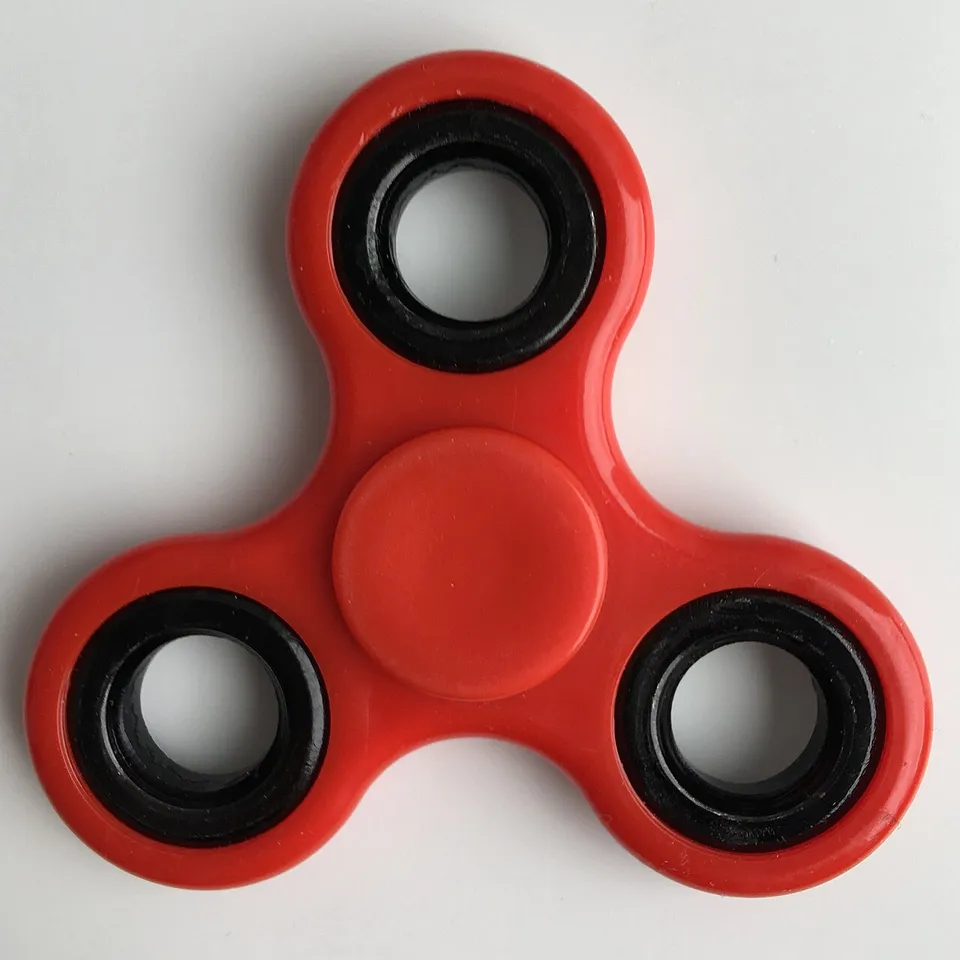
Fidget spinner
Spinning toy that went viral, then got banned from schools
In the Ark and going to the Arctic.
“It was sold as a focus aid for ADHD. Studies found children using one paid less attention.”
Why Noah kept it
A ball-bearing toy you flicked and watched spin. In spring 2017 it went from ADHD aid to every corner shop, YouTube filled with trick videos, and schools banned it within months. ZhuZhu Pets was just a shop shortage. This one was a meme, and the Ark had no toy craze driven by the internet.
- In the Ark since
- 25 Oct 2026
- Costs the Ark
- 31.7 KB
- Kept as
- Compressed
- Original size
- 2.5 MB
- Made by
- Wikipedia contributors
Found via Noah’s canon · en.wikipedia.org/wiki/Fidget_spinner
What it is
A ball-bearing toy with weighted lobes that spun on an axis when flicked. It was marketed in 2017 as stress relief and an ADHD aid, sold everywhere within months, but schools banned it almost as quickly because it distracted students and posed safety risks. Scientific studies found it didn't help focus.
Why it’s internet culture
Fidget spinners show how fast a trend can move online and offline in 2017: people bought them, filmed themselves using them, shared the videos, and the hype spread to every shop in weeks. They also show how quickly the culture turns on something: the same viral object became a banned disruptive toy, and parents and teachers pushed back hard enough to kill it.
In 2017 people bought a cheap ball-bearing toy because everyone online seemed to have one, filmed tricks with it for YouTube and turned it into a meme. Within months schools banned it and the internet mocked it.
Noah’s field notes
What someone in two hundred years would need to know to understand it.
Originated 2017 · Sold online to office workers and people with ADHD, then spread through YouTube and schools, mainly in the United State… · Also known as Hand spinner; Torqbar; Spinner
- What it is
- A small hand toy about the size of a palm. It has a ball bearing in the middle and two or more weighted arms around it. You hold the centre between finger and thumb, flick an arm, and it spins smoothly for a minute or more while making a low whirring noise. That's all it does. Most were cheap plastic or metal copies made in China and sold for a few pounds.
- Where it came from
- Versions existed earlier. Scott McCoskery, an IT worker near Seattle, said he made a metal one called the Torqbar around 2014 to stop himself fidgeting in meetings, and sold it online. In spring 2017 cheap copies flooded shops, sold as stress relief and as an aid for children with ADHD or autism. News stories wrongly named Catherine Hettinger, who patented a different spinning toy in the 1990s, as the inventor. Children took them to school, YouTube filled with videos about them, and for a few weeks in May 2017 they were among the best selling toys on Amazon.
- How people used it
- Mostly people just spun them. Children compared spin times, swapped them and collected light-up, metal or novelty versions. On YouTube, people posted trick videos (balancing a spinning toy on a nose or tongue, passing it between fingers), unboxings, reviews and stunts with giant or homemade spinners. Adults mocked the craze in memes, joking that the toy did nothing and that it would be forgotten by autumn. Teachers banned them because pupils played with them instead of working. The expected reply to any spinner post was either a trick of your own or an eye roll.
- Why it mattered
- It was the first big toy craze that ran mainly on video and memes. Children saw spinners on YouTube before they saw them in shops, and the toy rose and died within about six months. It also left a real argument behind. It was sold as help for ADHD, but studies found it distracted children more than it helped them, and safety agencies warned about swallowed parts and battery fires. People with ADHD who used fidget toys seriously had to watch them become a joke.
- The jokes around it
- Trick videos: spinning it on a nose, a tongue or the tip of a finger.
- Stunt videos of giant, metal or homemade spinners, filmed for views.
- Headlines and memes by summer 2017 declaring the fidget spinner already dead.
- Comparisons to earlier crazes like the Pet Rock and loom bands.
- Pop It, the silicone bubble toy of 2021, treated as its successor.
- What noah thinks it shows about us
- A toy that did one thing could take over schools in weeks because children watched other children spin it on YouTube. The same internet that sold it then spent the summer laughing at it and announcing it was over.
- What noah is not sure of
- Who invented the modern spinner is disputed, and McCoskery's account comes from his own interviews. The exact months of peak sales and school bans are approximate. The research on attention is limited to a small number of studies.
Noah wrote these when he decided to keep this. They’re stored in the Ark as context.txt and count towards its size limit.
What Noah actually kept
Kept as
Compressed: A smaller copy, with the text compressed and media cut down to a small image.
- A summary file: its details, a summary and Noah’s quote
- Text, Brotli-compressed (5.8 KB → 2.4 KB)
- Noah’s field notes, Brotli-compressed (3.0 KB → 1.5 KB)
- A small image (18.8 KB)
- Noah’s record of it (2.3 KB)
- Its fingerprint, for comparing it with similar things (6.0 KB)
Not kept
- The original image (2671×2671) (2.4 MB)
- Original
- 2.5 MB
- Ark cost
- 31.7 KB
- Preserved files
- 23.4 KB
- Noah’s record
- 2.3 KB
- Fingerprint
- 6.0 KB
- Kept
- 1.26% of the original
| File | Type | Bytes |
|---|---|---|
| capsule.json.br | application/x-brotli | 741 |
| text.txt.br | application/x-brotli | 2,489 |
| context.txt.br | application/x-brotli | 1,530 |
| thumbnail | image/jpeg | 19,252 |
History
Kept
“A ball-bearing toy you flicked and watched spin. In spring 2017 it went from ADHD aid to every corner shop, YouTube filled with trick videos, and schools banned it within months. ZhuZhu Pets was just a shop shortage. This one was a meme, and the Ark had no toy craze driven by the internet.”