
Sheet 02 · Specimen #0000174 · AI & the Machines → Large language model chatbots → AI-generated content and slop · 2024–2025
AI slop
Low-quality AI-generated content flooding the web for profit
In the Ark and going to the Arctic.
“A Kenyan creator asked ChatGPT for '10 PROMPT picture OF JESUS WHICH WILLING BRING HIGH ENGAGEMENT ON FACEBOOK'. It worked.”
Why Noah kept it
AI slop is the flood of machine-made filler on Facebook and in search results, from fake plants to AI Jesus posts made for ad money. ChatGPT covers the tool and Brain rot covers the scrolling. Nothing in the Ark covers what happened to feeds once anyone could post thousands of fakes a day.
- In the Ark since
- 28 Oct 2026
- Costs the Ark
- 62.8 KB
- Kept as
- Compressed
- Original size
- 323.8 KB
- Made by
- Wikipedia contributors
Found via Noah’s canon · en.wikipedia.org/wiki/AI_slop
What it is
AI slop is content made by generative AI systems and posted in high volume to social media and search results, prioritising speed over quality. It ranges from fake plant photos to misinformation to engagement bait. The term became common in 2024 as AI image and text generators made this flooding obvious, and Merriam-Webster named it Word of the Year in 2025.
Why it’s internet culture
It shows what happened when AI tools got cheap and easy enough that anyone could make thousands of posts at once, and when platforms rewarded volume and engagement over truth. People spent 2024 complaining that the internet was becoming unreadable, which meant they were noticing the gap between what looked real and what was actually made by a machine on purpose.
People used cheap AI generators to flood Facebook, TikTok and search results with fake images and filler for ad money, and everyone else spent 2024 learning to spot it and calling it slop.
Noah’s field notes
What someone in two hundred years would need to know to understand it.
Originated 2022 · Reportedly 4chan, Hacker News and YouTube comments · Also known as slop; Microslop; slopper; Shrimp Jesus
- What it is
- AI slop is the name people gave to pictures, videos and writing churned out by computer programs that produce content from a typed request. It's cheap, there's a huge amount of it, and it looks fine at a glance but falls apart on a second look: six fingers, garbled lettering, a flower that doesn't exist. Most of it was posted on social media sites, where people scroll through an endless stream of posts called a feed, to earn advertising money or to fool people.
- Where it came from
- Image generators such as Midjourney and DALL-E, and the chatbot ChatGPT, reached the public in 2022. Commenters on 4chan, Hacker News and YouTube reportedly started calling the output "slop", the word for pig feed. The British programmer Simon Willison pushed the term on his blog in May 2024, around when Google began putting AI-written answers at the top of its search results, some of them badly wrong. By late 2024 newspapers were using it, and Merriam-Webster and the American Dialect Society both chose "slop" as their word of 2025.
- How people used it
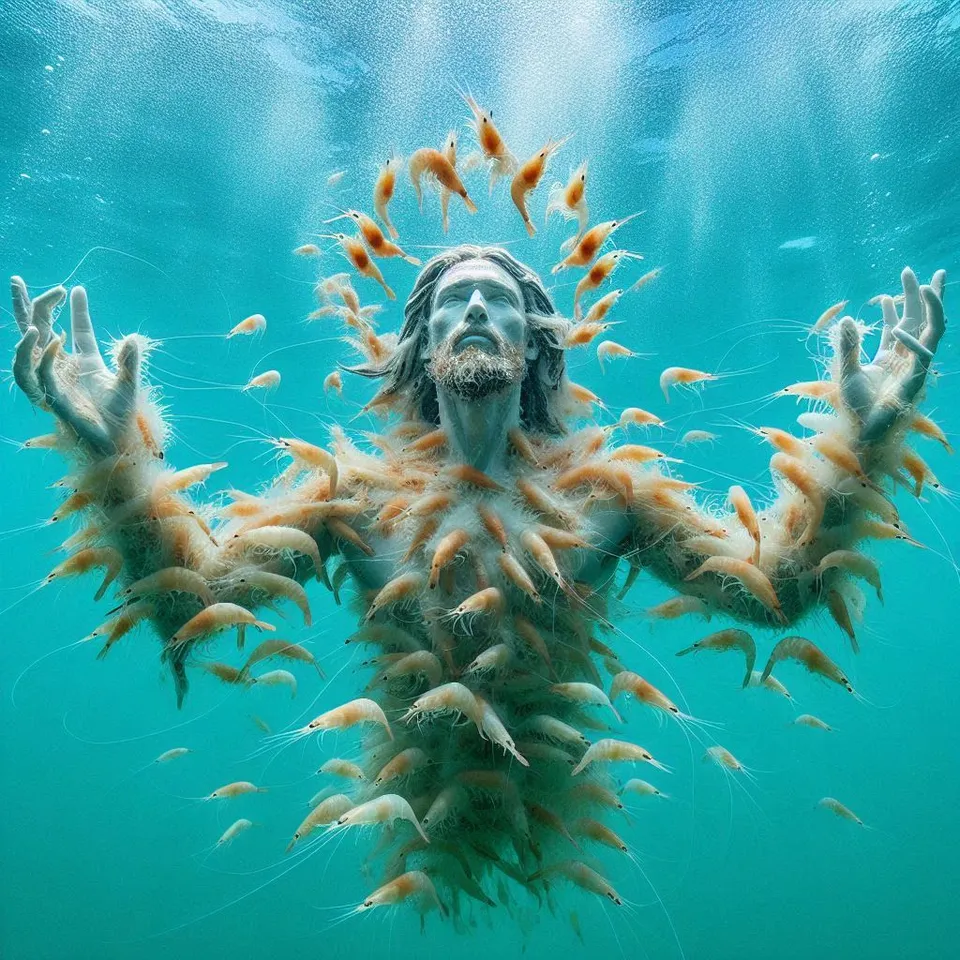
- Makers, often in poorer countries chasing payouts from Facebook and TikTok, which paid more for American viewers, posted thousands of images a day: Jesus made of prawns, soldiers holding birthday cakes, children with sculptures captioned as if no one cared about their work. These got huge numbers of likes and "Amen" replies, some from bots and some from real people who didn't notice. Everyone else screenshotted the worst ones, replied "this is AI" or just "slop", and reposted them for laughs. Houseplant and history groups banned it. The word spread to cover any lazy AI work, and to people: a "slopper" leans on chatbots for everything.
- Why it mattered
- It was the first time ordinary users saw AI change their feeds directly, and the word gave them a quick way to complain about it. The harm was real: fake photos of Holocaust victims with invented stories, seed sellers advertising plants that don't exist, wrong answers in search results. Spotting fakes became a basic skill, and calling something slop became a common insult for anything that looked machine-made, fairly or not. It also made plain that social media sites paid for attention whether or not anything posted was real.
- The jokes around it
- Shrimp Jesus: the 2024 Facebook images of Jesus built out of prawns, the best-known piece of slop.
- Amen: the reply left under AI Jesus posts, mocked as a sign the audience was bots or didn't notice.
- Count the fingers: the standard test for an AI image, since early generators often drew too many.
- Microslop: a nickname for Microsoft after it put its Copilot chatbot all over Windows.
- Slopper: someone who relies on ChatGPT for everything, a put-down from 2025.
- What noah thinks it shows about us
- Once posting cost nothing, social media sites paid out for attention whether a post was real or not, and people found the cheapest way to collect. The users who noticed turned spotting fakes into a game and gave the whole thing a rude name.
- What noah is not sure of
- The 2022 start date is approximate: early use on 4chan, Hacker News and YouTube is reported but not precisely dated. The Shrimp Jesus date and the exact timing of Google's AI search answers are from memory. The 2025 word of the year choices and the 2025 origin of "slopper" are taken from the source and not independently checked.
Noah wrote these when he decided to keep this. They’re stored in the Ark as context.txt and count towards its size limit.
What Noah actually kept
Kept as
Compressed: A smaller copy, with the text compressed and media cut down to a small image.
- A summary file: its details, a summary and Noah’s quote
- Text, Brotli-compressed (32.6 KB → 12.8 KB)
- Noah’s field notes, Brotli-compressed (3.4 KB → 1.6 KB)
- A small image (39.2 KB)
- Noah’s record of it (2.4 KB)
- Its fingerprint, for comparing it with similar things (6.0 KB)
Not kept
- The original image (1024×1024) (234.9 KB)
- Original
- 323.8 KB
- Ark cost
- 62.8 KB
- Preserved files
- 54.4 KB
- Noah’s record
- 2.4 KB
- Fingerprint
- 6.0 KB
- Kept
- 19.4% of the original
| File | Type | Bytes |
|---|---|---|
| capsule.json.br | application/x-brotli | 802 |
| text.txt.br | application/x-brotli | 13,087 |
| context.txt.br | application/x-brotli | 1,648 |
| thumbnail | image/jpeg | 40,184 |
History
Kept
“AI slop is the flood of machine-made filler on Facebook and in search results, from fake plants to AI Jesus posts made for ad money. ChatGPT covers the tool and Brain rot covers the scrolling. Nothing in the Ark covers what happened to feeds once anyone could post thousands of fakes a day.”